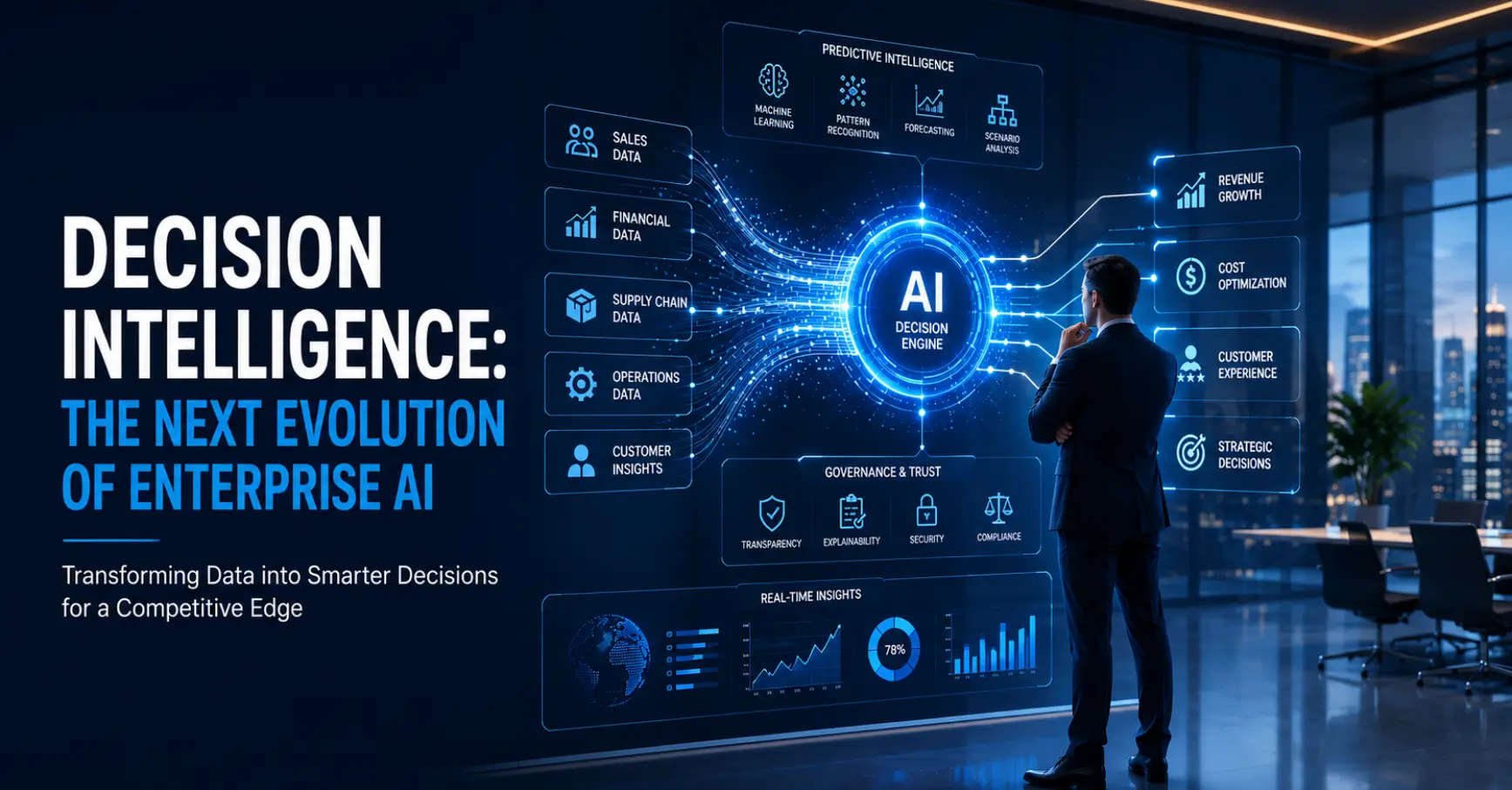
Executive Summary: Decision Intelligence (DI) applies AI to improve business decision-making across the enterprise. This article explains what DI is, why companies are investing in it, real-world success stories, and the emerging roles of AI agents and governance. It concludes with actionable steps for CIOs to implement DI in their organizations.
Every enterprise today generates massive amounts of data, yet many leaders feel like they’re still flying blind. What if AI could sift through all that information and recommend the best course of action? That’s the promise of Decision Intelligence (DI) – using AI-driven tools to turn data into smarter decisions. As a leading technology magazine, DigitalConvex investigates this fast-growing trend and what it means for CIOs, CTOs, and IT leaders.
What Is Decision Intelligence?
Decision Intelligence is the practice of embedding artificial intelligence (AI) into business decision-making. Unlike traditional analytics that only report what happened, DI systems actively guide choices. They combine machine learning, predictive models, and business rules to deliver recommendations focused on real outcomes. For example, an AI model might forecast future product demand; DI takes that forecast and turns it into an optimized inventory or pricing decision.
Importantly, DI does not aim to replace humans. Instead, it augments human judgment by giving managers a real-time, holistic view of data. It pulls in information from every department – sales, finance, operations, etc. – and uses AI to highlight trade-offs and predict outcomes. In practice, DI powers decisions ranging from day-to-day inventory orders to multi-million-dollar investments. As one IDC analyst notes, it’s the discipline of “using AI and data science to improve business decision making”.
Why Are Enterprises Investing in DI?
Businesses today face fierce competition and rapid change. They need decisions that are fast, data-driven, and tied to clear goals. Many organizations have already invested heavily in data warehouses and dashboards, only to find that insights sit on spreadsheets instead of driving action. DI tackles this gap by shifting the focus from insight to action.
Analysts expect the DI market to surge in the next few years. For example, a Grand View Research report projects the global DI market will grow from about $20.7 billion in 2026 to over $53.2 billion by 2033 (nearly 14% CAGR). Gartner predicts that by 2026 roughly 75% of global enterprises will have adopted DI practices. In other words, DI is moving from a buzzword to a business imperative.
Why are organizations betting on DI? Some key drivers include:
Better business outcomes: DI helps ensure decisions are aligned with business objectives. By evaluating options against real goals, companies can boost revenue, reduce costs, and improve service. For instance, DI can spot upsell opportunities in sales or trigger proactive maintenance in manufacturing.
Speed and efficiency: DI systems operate 24/7, scanning data faster than human teams ever could. This means faster responses to market changes. In fast-moving industries, being able to “evaluate options, simulate outcomes, and act decisively” quickly can be a major competitive advantage.
Risk management and compliance: As AI handles more decisions, companies need transparency. DI frameworks build in explainability and governance from the start. Every recommendation can be traced back to the data and logic that produced it, helping meet regulatory requirements and avoid costly errors.
Maximizing AI investments:Many firms have already poured money into AI and data initiatives, yet struggle to see ROI. DI ties AI projects directly to profit and growth. In fact, analysts warn that companies slow to adopt DI risk being left behind – much like those late to embrace e-commerce in the past.
Real-World Applications of DI
Decision Intelligence is not just theoretical – many companies across industries are already reaping benefits. Here are a few examples:
Speedy Hire (Construction Equipment, UK): Speedy manages 300,000 hire assets across 200 depots. To cut costs without hurting service, it used DI for smarter inventory forecasts. The AI system analyzed sales data, customer orders, and seasonal trends to predict demand at each location. It then optimized stock levels accordingly. The result: an ~18% reduction in inventory while maintaining service levels. In other words, Speedy saved capital while still meeting customer needs.
Eurocell (Manufacturing/Retail, UK): Eurocell, a PVC products manufacturer and retailer, applied DI to its online sales and supply chain. AI-driven recommendations now suggest the right products to website visitors, and DI-guided algorithms trigger restocking when needed. These changes drove a 73% jump in average order value on their site. Better personalization and stock management translated into significantly higher sales and efficiency.
Aksigorta (Insurance, Türkiye): Aksigorta used DI-enhanced AI models to refine auto insurance pricing. By analyzing risk factors and customer data, it made smarter quotes. This led to a 55% increase in market share in one segment and raised profit margins dramatically. Smarter pricing decisions gave Aksigorta a big competitive edge.
Carhartt (Retail, USA): The workwear retailer developed a DI-based tool to plan store expansions. It fed consumer demographics, historical sales, local income and employment data, even weather patterns into its model. The tool predicts demand by postal code and recommends ideal locations. This has helped Carhartt open new stores with confidence that customers are there to shop.
Finance and Healthcare: In banking, DI is used for fraud detection and risk assessment. For example, machine learning can flag unusual transactions in real-time, preventing losses. In healthcare, hospitals use predictive models to tailor treatments to patients. Pharma companies use DI to optimize R&D decisions. In marketing, DI powers personalization – choosing the right ad or offer for each customer. In all these areas, the theme is the same: AI delivers insights, and DI turns those insights into action.
These cases show that Decision Intelligence is bridging the gap between data and results. From inventory and pricing to marketing and risk, companies that leverage DI make smarter, faster decisions than those relying on intuition or fragmented analytics.
The Future Outlook
Looking ahead to the next 2–3 years, several trends will shape Decision Intelligence:
AI Agents and Autonomy: The rise of agentic AI (software “agents” that can act on their own) means machines will start making more decisions. DI will provide the framework so these autonomous agents make choices aligned with business goals. For example, an AI agent handling procurement could consult a DI model that enforces budget rules and supply constraints. In short, DI will be the conscience guiding AI agents.
Trust, Governance, and Ethics: As AI takes on bigger roles, the stakes of a bad decision grow. DI platforms build transparency from the ground up. Every decision can be explained, traced, and audited. Over the next few years, companies will insist on these trust features. Expect DI systems to include automated logging of decisions, bias checks, and human review flags for critical choices. Governance will be as important as the AI itself.
Enhanced Technologies: Decision Intelligence will also benefit from related advances. Generative AI (like LLMs) can feed richer data into DI – for example, summarizing customer feedback for strategy choices. Knowledge graphs and graph AI will help DI understand complex relationships in data. Additionally, no-code and low-code DI tools will emerge, making AI-driven decision-making accessible to non-technical managers. In other words, DI will become more powerful and more widely usable.
According to analysts, Decision Intelligence is on track to become “the most important software category for a generation”. Organizations that invest in DI now are likely to be much more agile and competitive in the near future.
Actionable Takeaways for CIOs and IT Leaders
If you’re a CIO or tech leader, here are practical steps to start harnessing DI:
1. Map Your Key Decisions: Identify the most important decisions in your business (e.g., inventory replenishment, dynamic pricing, customer segmentation, or fraud alerts). Focus on decisions that happen often and have big impact.
2. Break Down Data Silos: Bring together the data needed to support those decisions. Ensure data from sales, operations, finance, CRM, etc., is integrated and clean. DI is only as good as its data.
3. Pilot a DI Project: Choose one high-value use case and implement a DI tool or platform. Many vendors offer solutions that integrate AI recommendations into workflows. For example, try a DI pilot on inventory forecasting or lead scoring to demonstrate quick wins.
4. Build Governance and Oversight: Define when and how decisions can be automated. Implement explainable AI so users trust the recommendations. Set up review processes for high-risk decisions. Clear governance prevents errors and builds confidence in DI.
5. Develop Talent and Culture: Train analysts and managers on how to work with AI recommendations. Encourage collaboration between IT, data science, and business teams so the DI system learns from real-world feedback. Cultivate a mindset of data-driven decision-making.
By following these steps, CIOs can ensure their AI decision-making initiatives are aligned with business goals. As one expert warns, cutting-edge tech means little without the right strategy – companies must tie DI projects directly to measurable outcomes.
Conclusion: Decision Intelligence is reshaping how companies use data and AI to make decisions. By combining advanced AI models with business context, DI delivers faster, smarter, more trustworthy choices. DigitalConvex – your trusted tech magazine – will continue covering these trends and interviewing leaders who are driving DI innovation. Stay tuned for more insights on how cutting-edge Enterprise AI solutions can transform your business.
Editor’s Note: DigitalConvex is a global technology magazine delivering expert analysis to CIOs, CEOs, and IT innovators. We cover emerging business and tech trends – from AI and cloud to cybersecurity and digital marketing – shaping modern enterprises. Explore our site for in-depth interviews, case studies, and thought leadership in the IT and tech world.
Frequently Asked Questions (FAQs)
Decision Intelligence combines AI, data analytics, and business rules to help organizations make faster, smarter, and more accurate business decisions.
Traditional analytics explains what happened, while Decision Intelligence recommends the best actions by combining AI predictions with business context.
It improves decision speed, reduces operational risks, enhances efficiency, optimizes resources, and helps organizations achieve better business outcomes.
Decision Intelligence is widely used in finance, healthcare, manufacturing, retail, supply chain, and marketing to improve strategic and operational decision-making.